The philosophy behind Aine - after Konomi Festival
Eighty years ago, a kimono could mean far more than beauty or tradition — it could help a woman and her children survive hardship.
“...and yes, there are many of these kimono in Japan, and people have begun taking action. My concept is to give a second life to kimono that have been stored away for a long time…”
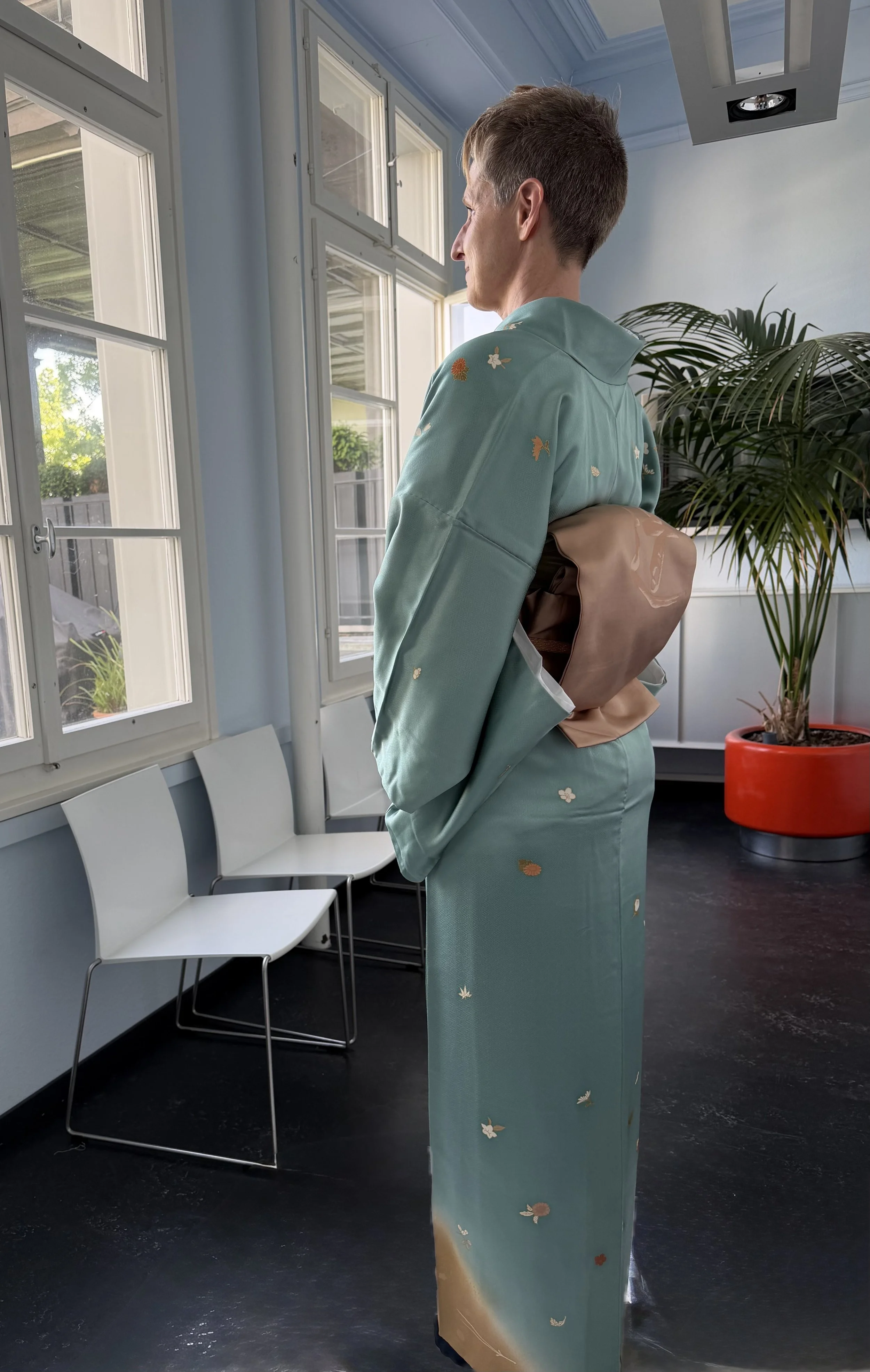
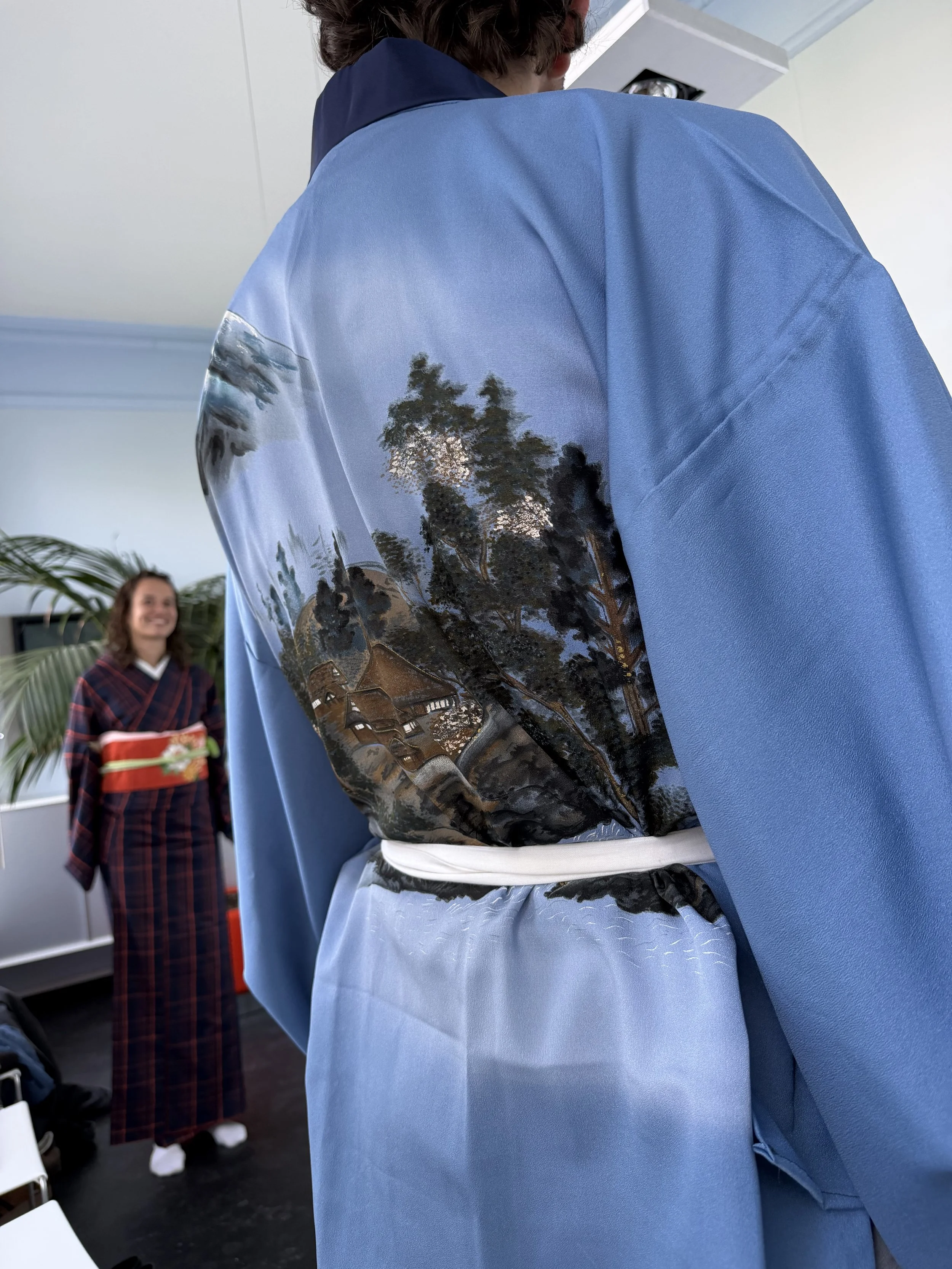
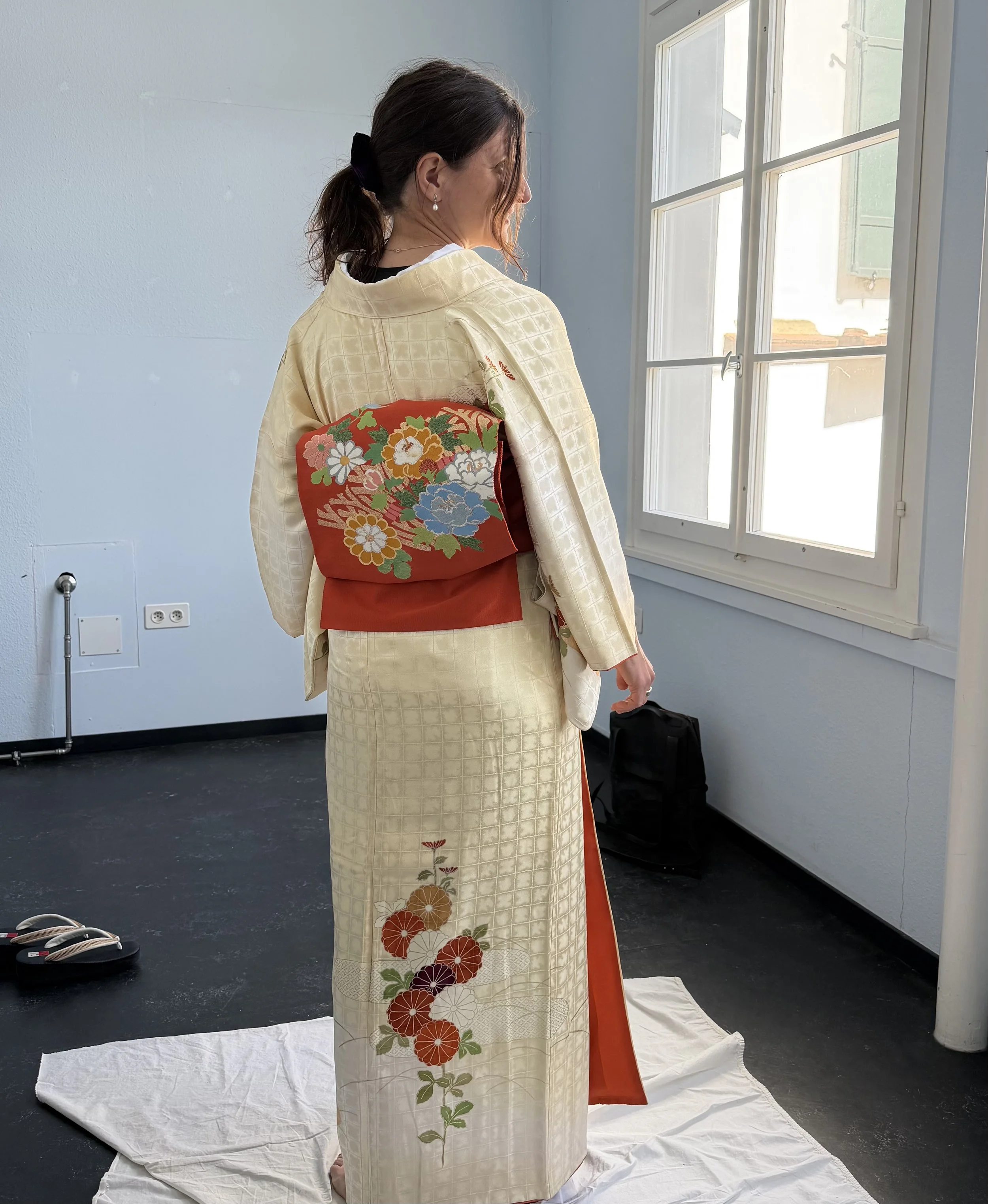
While speaking to visitors at my Kimono Fitting Experience sessions during the Konomi Festival in Basel last weekend, I realised I had not spoken enough about the lifecycle of kimono — and how this idea eventually led me to build a brand called Aine around it.
A long time ago, when a woman was getting married, her parents would send her off with at least one formal kimono. A woman might one day find herself in need of formal attire, and she would already have something prepared. Needless to say, these were very beautiful kimono. In times of hardship, they could even be sold in exchange for something essential — whether for shelter or food. They provided families with a means to continue living. They were both a practical necessity and a gesture of support as a daughter entered a new family.
These precious garments were carefully stored away, much like savings kept for a rainy day.
Maybe some were worn.
Maybe some were never worn.
Times have changed over the last fifty years, and the majority of people in Japan now wear Western clothing. It appeared more practical, fashionable, and affordable. Diets changed as well, and younger generations grew taller and larger in build.
And the kimono?
My guess is that over the last twenty years, the old wardrobes have slowly been emptied, and now even the kimono drawers of the 1990s are being cleared out.
These traditional garments, designed to be worn across three generations, are no longer in great demand. Today, kimono are mostly worn for ceremonial occasions, and during the Covid pandemic many of those occasions disappeared for several years. The kimono industry became dismal. This leads to another issue which I will write about another time.
Younger generations in Japan have recognised that they must deal with what their predecessors left behind. As a result, many have begun taking action through upcycling kimono.
I think this is a brilliant use of kimono fabric, and I myself love working with old textiles and transforming them into something fashionable and practical. Yet as I began creating new pieces, I realised something important: perhaps the garments deserved to live fully as kimono first.
Like people, kimono have a lifecycle. The fabric is woven, the kimono is tailored, it is worn, and only afterwards is it transformed into something else. Kimono were designed to be worn across generations through re-tailoring. Even the cleaning process involved taking the garment apart in order to wash the fabric before being hand-sewn together again — a labour-intensive process that was never inexpensive. Entire professions once existed to care for and maintain kimono in this way.
At that moment, the difficulty I had been facing suddenly became clear to me. The kimono I was upcycling had never truly lived its life as a kimono. It had waited quietly to be worn, but that moment never came.
I began to feel a responsibility to let it shine before giving it a second life as something else.
Many people are drawn to kimono not only for their quiet beauty, but also for the sense of intention they create. Wearing one naturally changes posture and presence. Everyone looks beautiful in kimono — men and women alike.
So why not introduce the mystique of kimono through fitting experiences, classes, and even corporate team-building events? These experiences help people uncover something within themselves while also giving kimono the spotlight they deserve.
Perhaps their time has finally come again — not only to be seen, but to help people reconnect with beauty, presence, and meaning.
I am on a mission to do this in Switzerland. My hope is to work with as many people as possible, helping them uncover their own sense of beauty and presence through kimono.